
Feel Good Again: Proactive Planning & Prioritization
Jun 26, 2025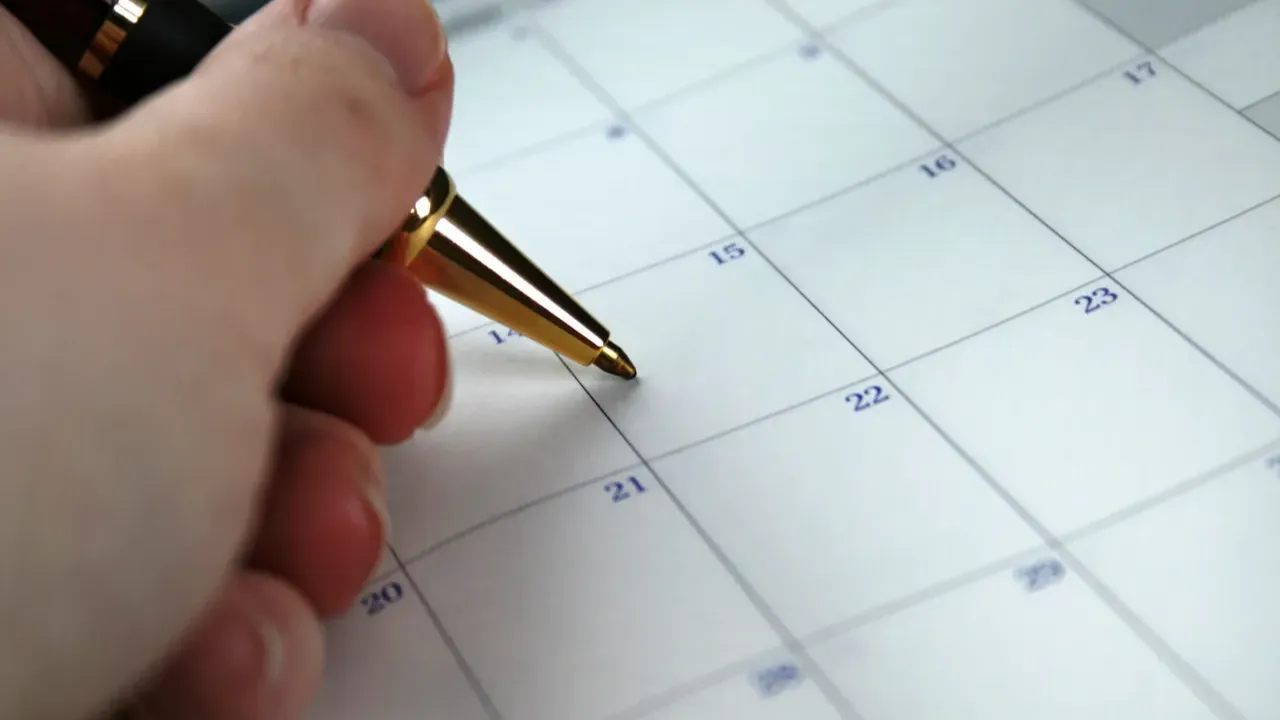
The word on the street is that midlife women do not care.
We're menopausal. We're struggling to hold everything together.
We're tired of trying to be perfect. We're done with all of the petty bs.
We don't care what others think.
You may have seen the viral Instagram phenomenon. It's called the “We Do Not Care” Club, started by @justbeingmelani on Instagram. She's a very funny lady. She talks about the difficulties of pre-menopause and how she just does not care any longer about the little things in life, like if she looks crazy shopping at the grocery store, if her kids don't want to bathe, etc. Essentially, the message is that she is doing her best to get by and doesn’t have the bandwidth to worry about all of this petty stuff. Women are supposed to have it all, do it all, be all to everyone, and look fabulous doing it. And it's become abundantly clear. Women all around the world are feeling it!
Some of the We Do Not Care Club posts have achieved over a hundred thousand likes per post.
Thousands of women are out there resonating with her, and they add in the comments all of the things that they currently do not care about. It's very funny.
These are midlife, premenopausal, to post, menopausal moms, wives, career women, singles - all women. None of us seem to be able to hide from a long list of obligations in our lives. But what does it really mean to not care?
I would argue that saying “I don't care” is similar to the way that we express anger. We're angry about this, we're angry about that, but really anger is an umbrella emotion. We use it to dump all of our complex feelings and frustrations into because it's easy to express anger. Like it's also easy to say, “I don't care” when usually there are a ton of deeper, more specific emotions underneath that just haven't been dealt with. Instead of dealing with the specific issues that bother us in our lives,
we often let them pile up until we just can't take it anymore.
But by that point, it feels like everything is going wrong. Then we explode in “I don't care.”
When in fact the opposite is true. We care a lot. It's just that instead of focusing on what we really care about, we feel stuck having to focus all of our time and energy on things that we don't care about. The petty stuff, the stupid rules, the stuff we don't like filling our lives with, the frustrating tasks and the people that we deal with, the decisions and irritating things we feel like have chosen us.
It's a lot easier to say that we don't care about things we have to do when instead the reality is that we are really upset at ourselves.
Why? Why would we be upset at ourselves, you ask? Well, for putting ourselves in the situations that we put ourselves into and then later decided that we don't like. We have the ability to choose how and where we spend our time, don't we? The energy that we choose to give to things and people.
We choose the work we do. We choose the commitments that we make. When we lose sight of the fact that we have chosen our lives – admitting that we did this to ourselves, we get frustrated. We lose power. We feel guilty for not performing everything with a smile. The positive, though, is that we can choose to take back our power. Take back our time, our choices, and our futures at any time.
That's exciting!
How you say, how can I take back my power? I've set myself up for disaster. I shouldn't have gotten those four puppies. I shouldn't have said I would be the Little League team mom. I shouldn’t have done [insert whatever the obligations you are now regretting.] Well, today I'm going to share three strategies to help you take your time back and put the focus back on things that you want to prioritize. We're talking about prioritization and planning proactively.
Let's talk about need-to-haves versus nice-to-haves. You have a million things to do, and you probably don't want to do a high percentage of them. Look at your calendar, or if you don't have an actual calendar, look at the virtual calendar in your mind. How many of these things do you really have to do? Let's be real with ourselves. There are likely a variety of items on your to-do list, some urgent and important and then others not so much. You have work related items, errands,
parental duties like driving your kids to practices, cleaning, cooking, paying bills, fixing things or managing people who are planning to fix things around the house, self care, exercise and other maintenance like hair appointments or getting your nails done.
Right now just look at this week on your calendar or if you don't have one, then list out all of the items that you have planned for this week - events to do's, etc. Which of these items are need-to-haves versus nice-to-haves? On my need-to-have list I have things like work. There are specific windows I need to focus on work, so I've got that blocked off. Driving my son to school and practices. I've got that blocked off. Paying bills. Only the ones that are due this week are on this week's list. Meals that I have to cook. Unlike many, I do not cook by a schedule and sit down with my family every night to eat at a certain time. I'm part wild animal in this way, but I like that. I'm happy with my reasons for doing that, and so I would not put meals on my calendar. Finally, events such as a back-to-school meeting that I have to attend lest I miss it altogether! I put exercise down - I've got my Club Pilates classes that I already scheduled and therefore must attend as a bare minimum commitment to myself. But I don't schedule five or six of them that I'm not sure that I can get to. I schedule only the ones that I have committed to and know that I'm going to get to. I've also scheduled the ones that I know as a bare minimum I need to maintain my muscle mass, physical fitness, and my mental sanity.
On my nice-to-have list, I have all of the less important to not important items. None of these are urgent. I've got a few personal appointments exercise that I would like to do if I’m at my most capable.
Do I think that all of those things will happen? No, they're really nice to have for me and so just something I am considering at this point. Cleaning, paying bills that are due later -not the ones for this week, and meeting up with an old friend for lunch. Something that I've been planning to do but don't have on my calendar. I also have tasks that I should do like fixing items around the house. For example, I've got an oven with two thermometers. One of those is broken, and I should order parts for it, but I don't have to. It's not keeping me from cooking. There's another oven and I don't want to. It involves a lot of hassles that I am probably not going to be up for anytime soon.
The reality is that you can continue on living with a messy house, with your oven thermometer broken, with the laundry not done, just ordering Uber Eats. You can put your nails off for another week. You can say no to the lunch appointments that you don't want to go to in the first place. Your kids may be committed to multiple activities per week, but in actuality, you could skip all of those activities for a week if you really felt like you needed to. You could probably even move around a few work meetings until next week if you feel particularly overloaded there, or better, take a sick day or two to get your mental health together. The point is that the world will not stop spinning on its axis if you put small pauses or even a gigantic pause on your life, especially if it means prioritizing what is most important, your mental and physical health.
Get Real About Your Capacity
We often overestimate our own capacity, and then we feel guilty about it later. In the past, I had a habit of biting off more than I could chew. In the high-energy weeks, I would make a bunch of appointments, get very ambitious, sign my kid up for all the activities, commit to social events, going out to drinks, or maybe even a weekend trip with a friend. Then there was the fallout: I'd get back totally behind, stressed out about the week to come. I overloaded myself and would quickly go from stressed out to burnout. Then I was worse off from where I started. As a last resort, I'd then swing completely in the opposite direction. Recognizing that I was in emotional dire straits, I'd reschedule all of the extra plans that I had for the week to rest.
I was now in reaction mode. Instead of being proactive and intentional about my priorities and life planning, things were very chaotic. The worst part about this way of living is that when you do actually give yourself a break, when you take the rest,when you cut down on the amount of obligations that you've set up for yourself this week, you don't even get to feel good about it because you're too busy feeling guilty about not performing, about not doing what you said you would do, about being a bad parent for ditching practices, or whatever it is, you can't even enjoy it because not doing what you said you would do makes you feel guilty and makes you feel like a failure. At least it did me.
But what if you were to be proactive and intentional in your planning all of the time, and you could prevent this type of overload in the first place? What a concept. First, you need an actual calendar.
I use Google Calendar, which I switched to a couple years back after I finally put my paper-based planner to rest. I loved writing in my paper calendar, but I just felt like it was easier to have a Google calendar in my phone, at my computer, anywhere I was at any time I needed to, and as a result, I had no excuse for not using it. But if you love a good paper calendar, do that.
First, what I want you to do is to calendar everything important. Write down everything that you have to do, that you must do, that you are required to do in order to keep your bare minimum quality of life going. You would do this in the actual days portion of your calendar for this week. At first just go week by week (more to come on why that will be important later). In your calendar day by day, you should have time blocked for each of the calendar events, each of the tasks and to-dos that you really need to accomplish this week. I would encourage you to go on the light side. Think about your bare minimums as opposed to over-projecting your capacity.
Then you're going to be left with a lot of other to-dos, events, options, maybes, could, shoulds, things that you may want to schedule but don't need to schedule. Put those in the notes section,
sometimes it's a portion on the right side of the calendar, a bunch of lines. But anywhere you can write down your nice-to-haves is fine. You may have so many nice-to-haves that you need another piece of paper to write down your list of nice-to-haves. If that's what you need, then go ahead and do that. It's better than having them in the calendar if you don't intend to get to them. We could spend a ton of time on calendaring alone,but this is a good start to know simply what are the things that you have to do in order to keep your life running at the bare minimum and know that everything else is just an option. That's the first strategy.
But how do you plan in advance for your future energy levels? You might say, how am I supposed to know if I'm going to have energy in two weeks? I booked this hair appointment. I know it's going to be a little bit of a shuffle getting there with driving responsibilities and work meetings. How am I supposed to know if other conflicts are going to come up or not? Well, back when I was committing myself to much more than I could handle the reason was that I was thinking with my current level of energy at the time, instead of realistic energy projections. I wasn't accounting for the work meetings that might come up, for the downtime I might need to rest, and for the energetic highs and lows that are a natural part of a woman's monthly cycle.
Cycle Syncing
Recently, I was listening to this podcast where a hormone health coach was a guest, and she was talking about how women's energy cycles are on a 28-day cycle following their hormone cycles.
@Littleraeofhealth shares this concept called ‘cycle syncing’. Basically, there are some times of the month where you have more energy and times when you have less, and it's geared to your monthly cycle. This coach works with women to help them sync their work and life duties alongside their cycles instead of doing what we usually do, which is try to force ourselves to perform well all month long at the highest level, every day nonstop.
The stages that she shares are menstrual, follicular, ovulation, and luteal. Yep – you may have learned about this a million years ago, but hear me out. At the beginning, you've got menstruation, right? Then you go into the follicular phase, which lasts until you ovulate, and then you go into the luteal cycle and repeat. So the first phase, the menstrual phase, really starts on day one of your period. You're in menstruation. She says that during this time you may be more tired, unwell, maybe you're cranky, in some pain, and we all get what happens during this time. But do we do anything different because of it? She suggests that you take it into consideration when planning out your calendar and your expectations for yourself. Instead of going full speed ahead, you might spend this time being more introspective and resting, taking it easy for a few days. She compares this to the season of winter, thinking about how during this time of the year, we lay low, you're not forcing a lot of outside activity, and when it comes to your ideal schedule, you're probably not overdoing it or overplanning for this time of your month.
The next phase is the follicular phase. So this is when hormones are low and then begin to rise. She describes this time as your creative spring. You might have a lot of creative energy and motivation during this time, and developing a strategy and ideation during this time of month would be smart because you've got the energy to do it. You probably also have more energy to exercise and
cook those healthy meals. This is probably a good time to get creative work done as you'll be inspired and motivated.
The ovulation phase is next. This is typically during the middle of your cycle, and she calls it inner summer. You're glowing, probably feel pretty good, you're looking good to yourself. And you should use this time to capitalize on feeling your best because it doesn't happen every week of the month.
Perhaps you could use this time by going out to social events. This is a good time to meet up with friends, amp up your exercise, because you're really feeling your best. So you can plan for that in your calendar.
Next is the luteal phase. This is the phase where your body is either preparing for pregnancy, or it's not. You might start to feel like nesting, right? Or your body goes into preparation mode - doing the prep work like it does when women start preparing for pregnancy. This time of month, it makes sense to check items off your to-do list. Clean up, clear out, get your need-to-haves done, and maybe even some nice-to-haves. This is the time! She calls it the get s**t done phase. But remember, the following week, the monthly cycle starts all over again. So the idea is to get as much done as possible when you're feeling up to it, because very soon your body is going to kick you back down to the rest stage.
So, how can you bring this information into your calendaring routine? Well, you can get in front of the month, understanding that you might feel higher energy during some weeks and lower during others.
You might start tracking your energy levels. One thing that she did say was that if you're on birth control of any sort, it sort of levels out your hormones, and so it may be trickier to use in that case.
Similarly, if you're going through menopause or you are post menopause, your emotions and hormones may be fluctuating - a little bit out of whack, if you will.
Either way, you can test by tracking your energy cycles. But you can use this as a starting point by knowing that your body's physically working for or against your productivity. It can be liberating.
Instead of feeling guilty or like you're failing at everything you do, embrace this information, embrace the changes that you naturally go through, and plan for them in advance.
This concept of cycle syncing was pretty enlightening for me because one of the most common things that women tend to do is not give themselves permission to rest. There's always something we feel like we could be doing or should be doing. So this concept gives us a good reason to try something a different way. Just try it for a month on your calendar. Assign each of the phases a week. You could do this in relation to your known menstrual period calendar, keeping in mind that it's not going to be exactly one week for menstrual, one week for follicular, one week for ovulation, and one week for luteal. But it's just a starting point. You can actually track your cycle on your calendar or your energy levels, more particularly to you after getting started. Then when you start to understand when you are typically tired, you can give yourself rest because you'll know that your body is telling you to slow down, and it is okay to honor that.
Cut the Chuff
The third strategy for prioritizing and planning proactively is about cutting the chuff, cutting the dead weight, the obligations, the things that you actually do not care about. Going back to your calendar or your to-do list: There are likely a lot of items on there that you don't want to do at your highest energy point, and surely you don't want to do them at your lowest energy point. So why are you doing them then?
It's good to understand your reasons for doing things. Your “why”? Women have to juggle a lot work,
family, health, wellness, home admin, and relationships. And it is impossible to do all of it well.
Therefore, there comes a time in every fed-up woman's life when she needs to realize that some of it has to go, and it has to go now! Instead, we overcommit. We say yes when we want to say no. We try to force ourselves to do things we think we should do, and we don't even know the reason we think we should do it. Are you doing something because you want to appear like a good mom? Are you doing it because you think it will make you a good girl or a better person? Or are you doing it because you think it's the right thing to do? That it matches up with your value system, that it's important to you? Know the difference.
We don't spend enough time doing what we love, or what we're passionate about. It's time to take inventory of your life. List out all of the items that you dislike doing and that you don't want to do. Then cut all of the ones that you can get away with. Period. Cut them out. List all of the items that you do love that you want to do more of, that you don't have time for - and do more of them. Period.
If you don't want to clean your house ever, then don't! Hire a cleaning person if you don't want to clean the bathrooms and you can afford it or make your kids do it to earn their allowance. If there is no one else that you can rely on, maybe just clean less. Who cares? I'm sure you can get away with one more week without cleaning the bathroom and no one will know the difference. Maybe the only one that will know the difference is you. Are you okay with it? Does it bother you? If not,
then it sounds like you're happy with your reason for letting the bathroom go. As long as you are okay with your reasons or your decisions, then you're good.
Chances are your time would be better spent on other things with a higher return on investment for you, your happiness, your priorities and the things that you care about the most. For example, time really is money. If you don't have to spend time every week deep cleaning, could you spend more time doing what you love? Making money? Maybe that's more time with your kids or working on your new business. Maybe it is just giving yourself some much-deserved self-care. If so, then having that time back is worth it because you will be able to accomplish more of what you want to accomplish, whether it's productivity, rest, family time, or something else.
Here are the main takeaways:
1. Get a handle on your calendar. Actually use a calendar to plan the events and tasks that you have to do. Then on the side, list out all of the nice-to-haves, tasks, events, the things you think you should be doing and put the list to the side. If you have time and energy for those, pick them off one by one. Otherwise, don't worry about those things because they're not the most important.
2. Plan your month out according to your cycle - cycle sync. If you're on birth control or you're not getting your period, this might be tricky, but you can still track and monitor your energy cycles and use that as a starting point to plan your months based on typical energy. This will inevitably help you alternate the high and low energy weeks in your life. If you're high energy one week, plan for a lower productivity week the next week. You can't be on all of the time. And once you start to see where your high-performing cycles are, counteract that with planned downtime and rest time to ensure that you're not overrun by doing all of the things all of the time.
3. And finally, go back to your nice to haves to do. List the items on there that you don't ever want to do. Just permanently scratch them off if you don't care about them. Delegate responsibilities for doing them. Get help. Have other people do the tasks. Get rid of the tasks. Free up your time to focus on what is most valuable to you.
I'm kicking off a mini-series on how to feel good in midlife. In each blog, I'll talk about a focus area to help you feel better. Stay tuned!
If you want help getting unstuck or figuring out how to plan around your priorities or the next big thing, about to take up time in your life, reach out to me @theboldlife coach. I'm happy to help.
Stop guessing what’s wrong with your career, and take action
Take the 2-minute Career Burnout Signals Quiz and get clear on your next move—burnout, boundaries, plateau, misalignment, or outgrowing.
👉 https://www.theboldlife.coach/career-burnout-quiz
Stay connected with news and updates!
Join our community and get access to exclusive resources.
We hate SPAM. Don't worry, your information will not be shared.