
Feeling Undervalued at Work? Ask This Before You "Go Where You're Valued"
Jul 27, 2026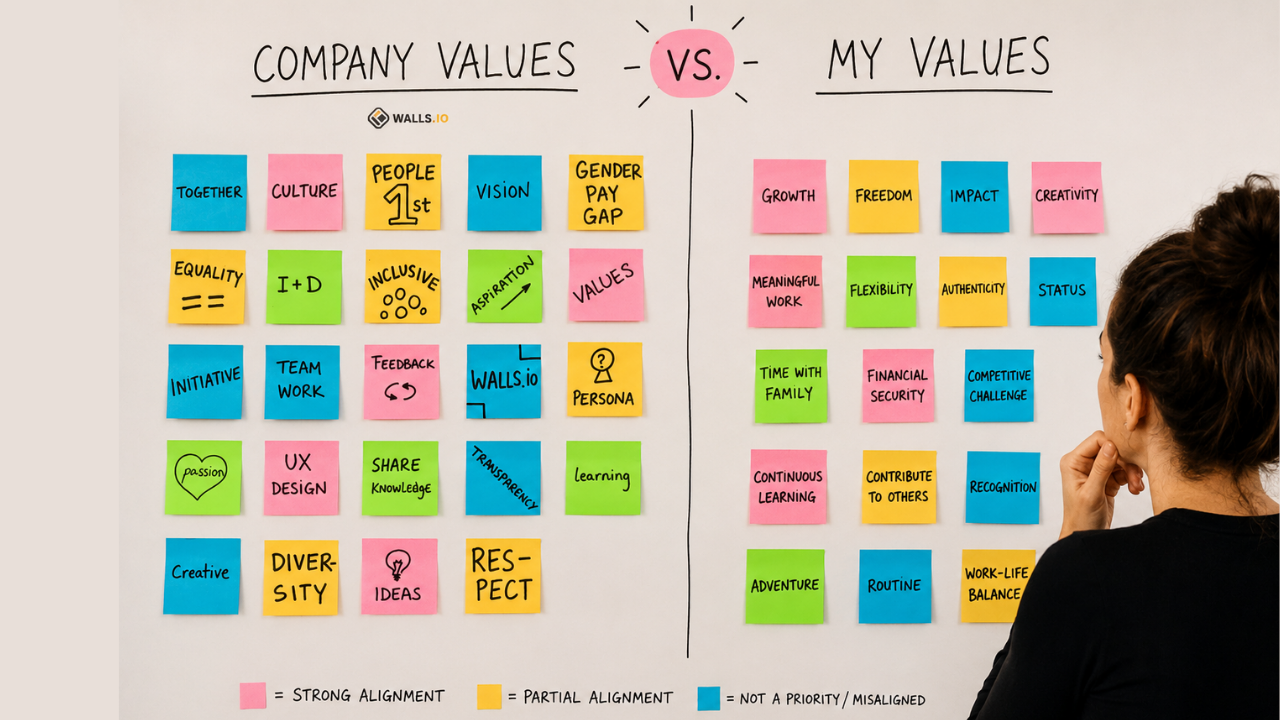
What to do when you feel undervalued at work — and how to know if it's time to leave or level up.
"Go where you're valued" has become a kind of battle cry for women who feel jilted at work.
You've heard it. I've said it. You've probably said it to a friend who was being overlooked, passed over, talked over in meetings. Maybe someone said it to you. It's on LinkedIn, it's in the group chat, it's in the pep talk you give yourself on the drive home after a day where you did good work and nobody noticed.
I understand why it lands. It gives you somewhere to point the frustration. It takes a vague feeling of being unseen and turns it into a plan: leave, go somewhere that sees you.
But I've watched women take that advice and skip the most important part — reflection. The self-inquiry that answers one question: Am I undervalued here, or am I underperforming here?
Reflection is how you answer that honestly. And "go where you're valued" lets you walk right past it — straight to the exit — before you've figured out which one you're actually in.
External value and internal value are two different things — and collapsing them is the mistake
Let me separate two things that get blurred together.
External value is how a place recognizes and rewards you. The raise. The promotion. The stretch project. The opportunities and access given to you. Whether your manager repeats your idea back to the room with your name still attached to it. External value is real, and wanting it isn't shallow. It's how careers actually move.
Internal value is different. It's what you know you bring, whether or not anyone has named it or validated it for you. The judgment you've built over twenty years. The strengths and skill set the team quietly relies on. The value you'd still know you have on the day the external signals go quiet.
It can be painful to know your internal value and not feel valued for your work. Most of the pain comes from mixing the two together.
On one side are women who've handed over their entire sense of value. If they got the promotion, they're valuable. If they didn't, they're not. Their worth rises and falls with the last performance review and other people's opinions.
On the other side are women who've done the opposite. They've decided their internal value is the only thing that counts, so any feedback that doesn't match it must be wrong. They don't even consider how they might be part of the issue.
Both are the same mistake. One trusts only the outside. One trusts only the inside. Neither is doing the actual work — holding both at once and staying honest about what you see.
When your internal value genuinely doesn't match what they'll recognize, that's misalignment
Sometimes the gap between the two is real, and it isn't yours to fix.
This is misalignment — one of the five career signals I talk about on this show. Misalignment is when the role, the culture, the leadership, or the environment no longer feels like a fit. There's friction. You're not less valuable. You're valuable in a place that isn't able or willing to see it.
I've watched this happen to brilliant women. She's operating at a level the org doesn't have language for. The thing she's best at isn't the thing this company rewards. The leadership above her measures success by something she stopped believing in two years ago. Nothing is wrong with her work — the environment just can't, or won't, recognize and reward her contributions.
When that's what's actually happening, "go where you're valued" is exactly right. That isn't running. That's a strategic career move toward a place that wants what you have to offer.
"They don't value me" is also the most comfortable place to hide a real performance gap
Now — some of you already decided your situation is the misalignment one. You heard "the environment can't see her" and thought: that's me.
Maybe it is. But stay with me.
Because "they don't value me" is also the most comfortable explanation you will ever be handed. It puts the problem out there — on them, on the culture, on the manager who doesn't get it. And it protects you from the harder possibility: that some of the feedback is accurate.
Sometimes the gap between how you see yourself and how they see you is not misalignment. It's a real gap in your performance. And your internal value — the thing that's supposed to steady you — quietly turns into the excuse you use to dismiss every piece of information that could help you grow.
I've watched this version too, just as often. She's genuinely good at her job. The feedback isn't that she's not talented. It's that she's been avoiding the hard part — the follow-through, the cross-functional relationships, the thing she finds tedious and keeps letting slide. It showed up in her last two reviews. Different managers. Same note. And every time it comes up, she has the same explanation ready: they don't value me here.
Maybe. Or maybe there's a real gap, it's hers, and it's completely fixable — but only if she's willing to see it instead of leaving to go look for the problem somewhere else.
I want to be honest, because I've done this. I decided I was undervalued in a situation where, if I'm truthful, I was also skipping the part of the work I didn't like — unintentionally and intentionally avoiding a piece of the job that was necessary to get me from there to here. Through reflection, I realized I needed to be more intentional about selling myself, communicating my offer, and showcasing my skills and contributions to build visibility and a reputation as a leader.
It's a lot more comfortable to update your resume than to sit with the idea that the criticism had something real in it. And if you leave every time your self-image and the feedback don't match, you don't grow. You don't escape the performance gap. You carry it into the next role, and the one after that. Same frustration, new building.
How to tell misalignment and a performance gap apart
One of the coaching models behind most of my work is The Model, from Brooke Castillo of The Life Coach School: circumstances are neutral, and it's your thought about them that drives what you feel and what you do next — and what you do dramatically affects your results.
A piece of critical feedback is a circumstance. It's just what happened or what was said. It's neutral until you decide what it means. "They don't value me" is a thought. "I can learn something from this feedback" is also a thought. The easy habit is to take the way out that puts the problem out there — to reach for judgment or blame instead of inquiry.
So how do you know if you're truly misaligned with your role, your boss, your organization? You get honest with yourself and look, before you decide. There are three things I look at.
First, how widely is the feedback showing up? A single manager who doesn't get you might be misalignment. The same note, from three different people, across two different jobs, is information about you — and it's worth taking seriously. (In my own case, while I was grumbling about not feeling valued, I was also, quietly, taking accountability for my part — my skill gap, where I got lazy.)
Second, is the feedback about the value you actually claim to bring, or something on the edge of it? If you say your strength is strategy and the feedback is that your slides have typos, that's not a challenge to your core value. If you say your strength is leadership and the feedback is that people don't feel led, that's aimed straight at the thing you're claiming. Not every piece of feedback carries equal weight.
Third, can you name specifically what they'd need to see from you — and honestly say you've already delivered it? Not that you're capable of it. That you've done it, consistently, where they could see it. If you can't say yes, the gap might be real. It might be at least partially you — and that's okay. We all have performance gaps; we're all growing. But it may be closeable, and leaving without reflecting on it won't close it.
Going where you're valued works — after you've done the work
None of this means "go where you're valued" is wrong. It's real, and sometimes it's exactly what a woman needs to hear. I just want you to do the work before you act on it.
There's a version of leaving where you've looked honestly and you know the gap isn't a performance gap. You've closed everything that was yours to close. What's left is a genuine mismatch between what you bring and what this place can use. When you leave from there, you're not walking away from an accurate assessment of your own work — you're moving toward a place that can actually recognize what you bring. That move holds. It's still true a year later.
And there's a version where you leave to avoid seeing your work clearly. That one doesn't hold. You feel the relief for about a quarter, and then the same gap shows up in the new job — because you brought it with you. The difference between those two exits is the work you did before you walked out.
This is Stage One: Recognize the Gap
This is Stage One of The Bold Life Career Reinvention Framework. Recognize the Gap. People hear that and think it means notice that you're unhappy, check the box, done. It doesn't. Recognizing the gap means correctly diagnosing what's actually wrong — because the entire strategy that comes after is built on the accuracy of that diagnosis. Get the diagnosis wrong, and every decision downstream is wrong too.
Recognizing the gap between your internal value and their external value is exactly this work. Is the world failing to see what you bring — or are you failing to deliver what you claim? Are you misaligned with the organization, or are you underperforming on something you need to move through the problem or to the next level? You have to recognize, truthfully, what's really going on before you can make the right decision. Only then can you decide what comes next: leave, go, stay, grow.
The work is to close your part first — so that when you decide, you're deciding on clean information.
So yes. Go where you're valued. Just do the harder thing first. Look at the gap honestly enough to know whose it is.
Because valuing yourself was never about defending your self-image. It was always about being willing to see yourself clearly — and choosing what comes next from there.
Not sure which career signal you're actually in? Take the free 2-minute Career Burnout Signals Quiz → https://www.theboldlife.coach/career-burnout-quiz
Stay connected with news and updates!
Join our community and get access to exclusive resources.
We hate SPAM. Don't worry, your information will not be shared.