
The Trap of Perfectionism
Jul 27, 2025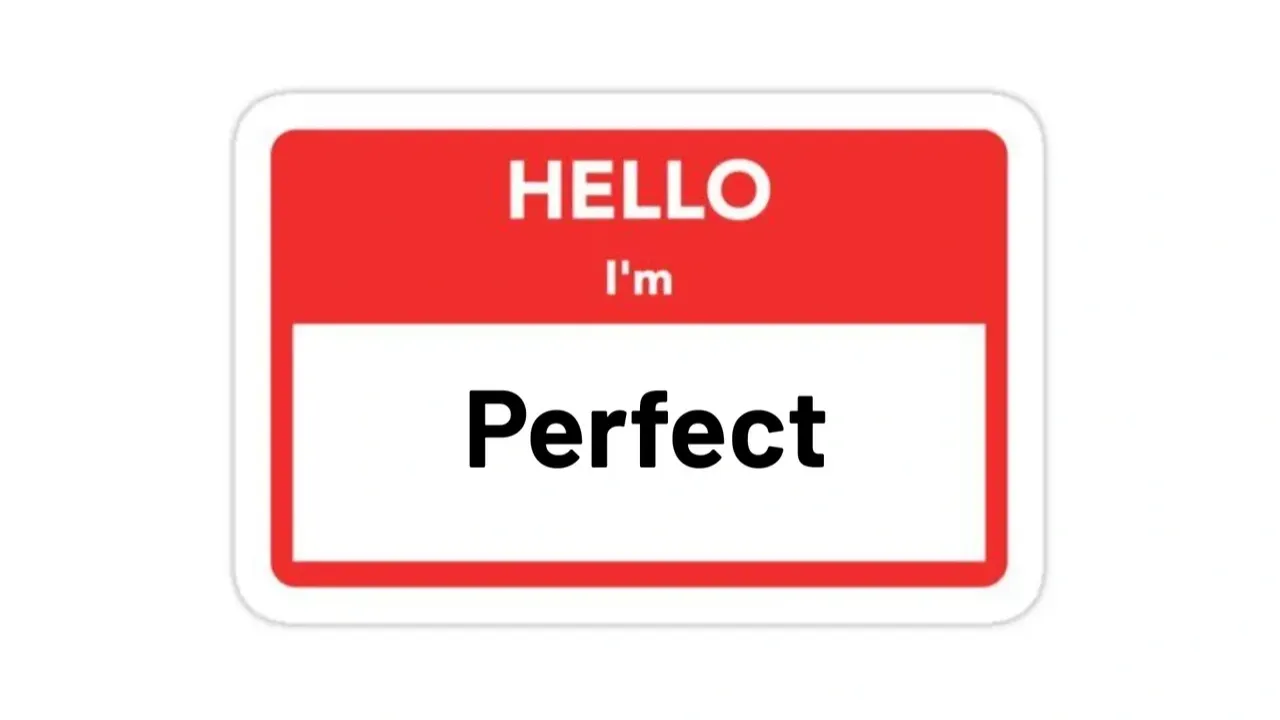
The other day I was at the therapist's office, and there was a big bowl of personal growth-oriented stickers. I now have a big sticker on the back of my phone case that says, "HELLO, I AM Perfect." I think what attracted me to this sticker is that I see perfection as something to strive for, but I also understand the sheer irony of the statement.
Today, we’re diving into a topic that many of us grapple with, yet rarely talk about: perfectionism. Wanting to do something well and do it right the first time, to do your personal best, is admirable. It speaks to the fact that you care. You want to bring forward your best foot. You want to please others and yourself. But expecting perfection in yourself and others is a dangerous road to travel.
Perfectionism can quietly take hold of our lives and rob us of joy, progress, and true success. So let’s break down what perfectionism really is, how it shows up in our lives, and most importantly, how we can start to let go of it to create space for freedom, authenticity, and growth.
What even IS perfectionism? Striving to be perfect. At its core, perfectionism is the belief that everything we do needs to be flawless, that we have to meet extremely high standards in every area of our lives. And we often expect these high standards for others as well.
Perfectionism may seem harmless at first, but it can be a silent killer to our mental health, productivity, and relationships.
We try to reach impossible standards of beauty, wealth, and success measured by what we see out there on Instagram, and what's worse is that today we are measuring ourselves against massive airbrushing, Photoshop, and AI. We are trying to keep up with a standard that doesn't even really exist. So much so that Americans have gone into major debt to afford their lavish lifestyles to keep up appearances with their peers.
We judge ourselves harshly while we want more for ourselves. We want to try something new, to create art, or write a book, but we freeze up when getting started. We call it writer's block when a writer cannot write, but often this type of block is the result of thinking, I can't do it. My ideas aren't good enough. This work won't be good enough. So we do the opposite of action - we don't create, and that leads us to results that simply back up the belief that, "I'm not good enough."
It is easy to become so fearful of failure that we block our own ability to learn and grow from our mistakes. Perfectionism keeps us from trying. Then we look back ten years later and are ashamed that we never achieved our dreams. Meanwhile, growth actually happens in the mistakes and failures rather than in the successes. We learn from what is not perfectly executed, not perfectly accepted or loved by fans. But learning and growth only happen if we begin.
It takes a long time to become an expert at something - Malcom Gladwell would say 10,000 hours to become an expert on something. But day one of beginning a new plan or creating something, we compare ourselves to those who have been at it for years or even decades. We have to allow ourselves to be messy, new to the game. This is a beginner mindset. It is perfectly honest and admirable to admit that we have a lot to learn. But beginning, even when we know we are beginners, is what allows us to start getting better at it. This is the catalyst to feeling more confident, building momentum, and moving forward with our goals.
Perfectionism shows up in how we - often unfairly - treat others. When entering the dating pool, some have very high standards when looking for a mate. The list of must-haves is long! This prospect must be 6'3, model hot, Ivy League educated, a handyman around the house, sweet, funny, romantic, faithful, and a great father. Add in good morals and emotional intelligence, and well, a lot of women are NOT finding this particular mate out there. Plenty of us feel that we have earned the right to expect high standards in a potential date. It's not wrong! We have worked hard to achieve success, and we want a partner who operates on a similar level, has compatible values and views. Why shouldn't we? But looking for the perfect mate is keeping a lot of women single. Their standards are unrealistic. And on top of that, how many women can say that they have all of the same requirements on their resume that they expect from a future mate? We expect men to be perfect and have it all together, but many women don't hold themselves to the same standards.
I have this vague memory from childhood where I recall one parent nagging about keeping up with the housework and wanting to have it held to a certain standard. Then the other parent said something like, you are the only one that cares about that, so you do it. I still think about that today because it reminds me that we often hold others to standards that we set for ourselves. Is it fair though for us to force our vision, or standards, our desires on others? With that in mind, many women choose to stay single, happy, and alone. As long as we are happy with our reasons, there is no shame in that. But it begs the question: Am I being reasonable, or am I being a perfectionist?
How we judge others is often an indication of how we judge ourselves. If you have an aversion to those who are overweight, you are likely extremely concerned with your own weight or it triggers you in some way. If you can't stand it when that one co-worker keeps taking over meetings with their charm, it's likely that you are fearful of not getting the same limelight or have some subconscious jealousy. What we see in others, we often lack in ourselves. Your thoughts, feelings, and actions are a mirror to your inner self. The person in the driver's seat. Your focus on attributes of someone else is triggered by your own thoughts and beliefs, tracking back to issues within YOU. By focusing outward on the lack, the failures we see in others, we avoid having to look at ourselves. We fail to see areas of ourselves that we need to heal.
Perfectionism sets us up for failure because perfection doesn’t exist. It’s an unattainable ideal that keeps us chasing something that we’ll never catch.
As women, we are often conditioned to meet the needs of others—whether it’s our families, our partners, or our colleagues. This can make perfectionism especially insidious because we end up neglecting our own needs, desires, and dreams in the process.
How many of us have felt that we need to juggle work, motherhood, housework, and social obligations all while maintaining a “perfect” image? It’s exhausting, and it’s a setup for burnout. Women are often expected to wear multiple hats without missing a beat, and when we do, we feel like we’ve failed.
Perfectionism breeds chronic stress.
Always striving for something impossible to achieve puts a constant strain on our mental and emotional well-being. We start to experience burnout, anxiety, and depression because no matter how much we do, it’s never enough. This relentless pressure leaves little room for self-compassion and can lead to feelings of inadequacy. We feel terrible about ourselves because our thoughts are filled with lack. We hold up this false mirror to ourselves and reinforce our beliefs that we are not enough.
This type of thinking can also prevent us from truly embracing our authenticity. Perfectionism can push us to put on a mask, pretending to be something we’re not, all in the name of meeting expectations—whether our own or society’s. But in the process, we lose sight of who we truly are. We get stuck living somebody else's life and living out someone else's dreams instead of being true to ourselves.
Another huge cost of perfectionism is procrastination. I know that sounds counterintuitive, but let me explain. When you feel like something has to be perfect, it can paralyze you into inaction. You get stuck in the planning stage, or thinking about it state, endlessly perfecting the details or needing to stew on it longer, but never taking action. You stay in indecision, fearful of making the wrong choice or making a mistake. Ultimately, nothing gets done, and the cycle repeats.
Perfectionism makes it difficult to connect with others from a place of love. Choosing to exert your will, your expectations, and your demands on others - your partner, your children, your employees - causes people to feel unsafe with you. And relationships are about emotional connection and safety. Perfectionism in relationships can show up as lack of tolerance for personal differences, refusal to listen to differing perspectives, or refusing to care if your expectations are not met. Maybe you don't care if people like you or if you come across as a heartless B, but someday, you may care. Hopefully, it won't be too late.
So, how do we start letting go of perfectionism?
- The first step is to recognize that it’s a mindset. It’s a set of beliefs that we’ve internalized over time, and just like any other belief, it can be unlearned.
- The next step is to practice self-compassion. Instead of beating yourself up for mistakes or imperfections, treat yourself with the same kindness you’d offer a friend. When you mess up, instead of focusing on the flaw, ask yourself: “What can I learn from this?” and “How can I do better next time?”
- It’s also about shifting your focus from perfection to progress. Instead of aiming for flawlessness, aim for improvement. Celebrate small wins and embrace the journey rather than fixating on the destination.
- Another powerful shift is to embrace imperfection. Accept that you don’t have to have everything figured out. It’s okay to ask for help, to make mistakes, and to not have all the answers. The more you accept yourself as you are, the less you’ll feel the need to prove yourself.
Ladies, perfectionism is a trap. It holds us back from the bold, unapologetic, and fulfilled lives we are meant to lead. It keeps us stuck in a cycle of self-doubt and frustration when we should be celebrating our progress and growing into the powerful women we are.
Remember, you are enough just as you are, and you don’t need to be perfect to be worthy of success, love, and happiness. So, let go of the pressure to do it all, to be flawless, and to meet impossible standards. Start embracing your imperfections and step into your authentic self.
Until next time, keep living boldly and embracing the beauty of being perfectly imperfect.
Stop guessing what’s wrong with your career, and take action
Take the 2-minute Career Burnout Signals Quiz and get clear on your next move—burnout, boundaries, plateau, misalignment, or outgrowing.
👉 https://www.theboldlife.coach/career-burnout-quiz
Stay connected with news and updates!
Join our community and get access to exclusive resources.
We hate SPAM. Don't worry, your information will not be shared.