WHAT IF? Self-Improvement Is Keeping You Stuck
Oct 25, 2026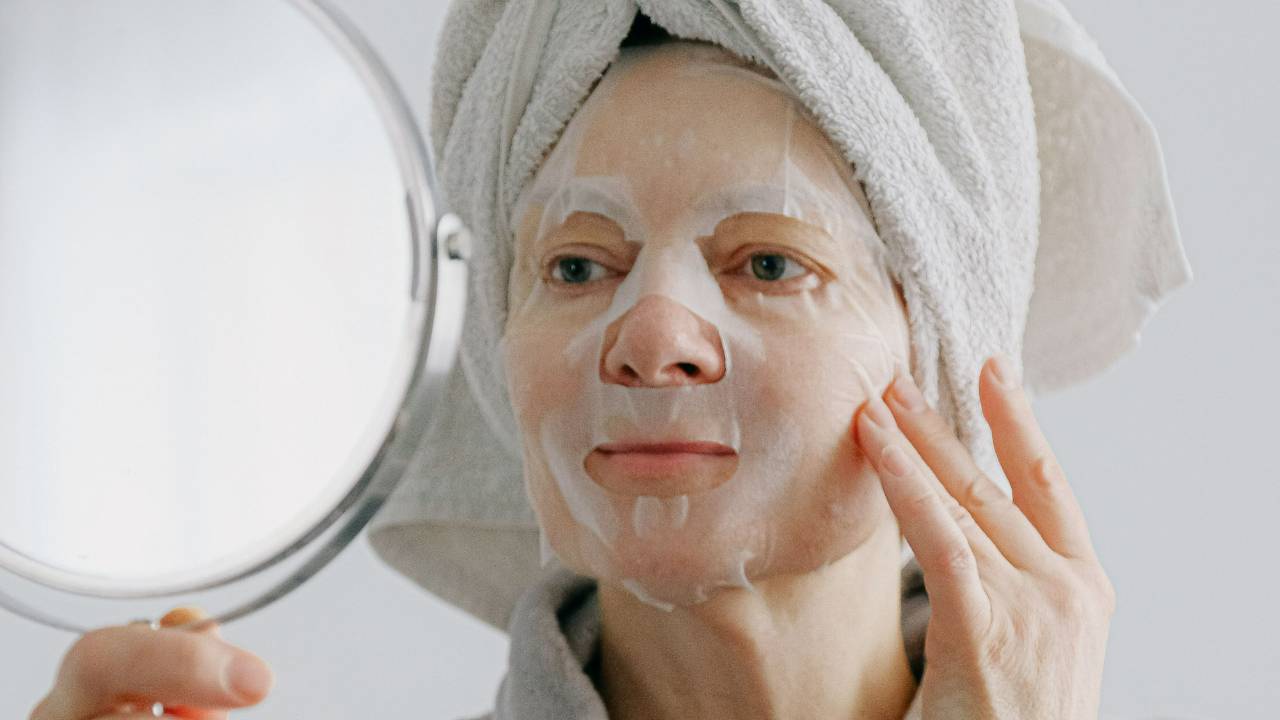
Someone else's beautiful routine looked like a second job to me
Have we turned self-care into another performance review?
Because I have a question about it. At what point does taking care of yourself become another thing you're obligated to do? Another standard to maintain? Another area of your life where you can fall short, feel guilty, and decide you need to do better?
I have been fascinated recently by an Instagram creator, @paulinacee, who shares videos of her life at home in New York City after work. She's an introvert, and her videos capture this very intentional, almost luxurious relationship with her downtime. She takes care of herself, tends to her physical appearance, loves on her cat, makes things from scratch, and creates these lovely little rituals around being home.
She'll make homemade soup. She'll carefully clean her shoes before coming into the house with some sort of little laser. She takes time with the small details of her life in a way that feels almost ceremonial.
And I find it genuinely beautiful.
There's something about watching someone treat her own life as something worth tending to. She's not waiting for a special occasion to make things lovely. She's not saving all her care and attention for other people. She's creating an environment and a set of rituals that seem to bring her pleasure simply because she gets to live them.
I love that.
And yet, as I watch, there's another voice in my head that says, Oh my God. I could not do all of that.
I don't mean that critically. I mean I can practically feel the weight of maintaining all those rituals. The grooming, the cooking, the cleaning, the preparation, the consistency. For me, it would be a huge weight. I start imagining the sheer number of things I'd have to keep up with, and suddenly this beautiful vision of self-care feels like a second job.
And that got me thinking.
What if self-improvement is keeping us stuck? What if the very things we're doing to take better care of ourselves can sometimes become another way we make ourselves feel inadequate?
When self-care becomes self-management
Let's be clear: I'm not against self-care. I like feeling good. I like taking care of myself. I appreciate a beautiful environment, a good skincare routine, and the satisfaction of doing something well. In theory.
And I think there's something wonderful about the idea that caring for yourself doesn't have to be an afterthought. You don't have to wait until everybody else is taken care of, the house is clean, the work is done, and the world has stopped demanding things from you before you get to enjoy your own life.
But I wonder whether we've started to turn self-care into something else.
We've got our morning routines, our evening routines, our supplements, our exercise plans, our skincare regimens, our meditation practices, our journaling, our sleep hygiene, our meal preparation, our emotional regulation, our personal development.
And just when we think we've got things under control, someone introduces a new habit that will apparently change our lives.
Now we need to be doing that, too.
There are constantly ways to improve ourselves being marketed to us, and we believe the hype.
At some point, the list of things we're supposed to do for our well-being becomes so long that I have to wonder: When exactly are we supposed to enjoy the well-being we're working so hard to achieve?
Imagine spending your entire evening taking care of yourself and then lying in bed thinking about all the things you didn't get done. You did your skincare, but you didn't stretch. You made a healthy dinner, but you didn't meditate. You exercised, but you didn't read. You read, but you didn't journal. And you forgot to take the supplement that someone on the internet swears is the key to longevity.
Congratulations. You've managed to turn being alive into a performance improvement plan.
But if you're anything like me, not doing all of it can start to feel like you're failing to keep up with some intangible standard of womanhood.
How much of this is actually about what makes us feel good, and how much is about the endless list of things we've been told a woman should be doing to look good, feel good, age well, stay healthy, and have her life together?
And the absurdity is that these things might all be good for you. That's what makes this so interesting. We're not necessarily filling our lives with bad habits. We may be filling them with good habits until there's no room left to actually live.
The difference between a ritual and an obligation
Here's what I've been thinking about with the Instagram creator I mentioned.
The same behavior can mean two very different things depending on the relationship you have with it.
Making soup from scratch can be a pleasure. You like choosing the ingredients, chopping the vegetables, watching everything simmer, and knowing you'll have something delicious to eat. It's an experience you enjoy. I love that for self-described foodies or moms who love to cook.
Or making soup from scratch can become a rule. You've decided that a responsible, healthy person makes food from scratch, and buying something prepared means you've somehow failed to take proper care of yourself.
What kind of woman am I if I don't make dinner regularly?
Same soup. Entirely different experience.
The same is true of exercise, skincare, meditation, keeping a beautiful home, or just about any other self-care practice.
A routine can support you. It can give your day structure, help you feel grounded, and make your life more enjoyable. Discipline can be an expression of self-respect.
But discipline can also become a form of control, over yourself and over your perceived value in the world. You can start using routines to manage every aspect of yourself, leaving very little room for spontaneity, rest, or simply being a person who doesn't always do everything perfectly.
So here's the question I keep coming back to:
When does the routine serve you, and when do you start serving the routine?
I don't think the answer is necessarily whether something feels easy. Plenty of things we genuinely value require effort. You might not feel like exercising every day, but you still appreciate how it makes you feel. You might find cooking from scratch time-consuming but love the experience enough to keep doing it.
The more interesting question is what happens when you don't do it.
If you skip your evening routine, can you enjoy your evening anyway? Can you order takeout without turning it into evidence that you're undisciplined? Can you go to bed without completing every item on your list and still feel that you've taken good care of yourself?
How guilty do you feel for not living up to the standards set by 1950s patriarchy or 2026 Instagram?
Does missing the routine trigger that familiar voice telling you that you should be doing better?
Because if the practice is supposed to help you feel better about yourself, but failing to perform the practice makes you feel worse about yourself, I think that's worth examining.
Not because the routine is necessarily wrong, but because your relationship with it may have changed.
Are you caring for yourself, or trying to fix yourself?
I think this connects to something much bigger than our evening routines.
We live in a culture that is extraordinarily good at finding things for us to improve about ourselves.
We can improve our health, our appearance, our productivity, our relationships, our communication, our emotional intelligence, our financial habits, our leadership skills. We can become more confident, more resilient, more disciplined, more organized, more mindful. Thinner. Younger. The list goes on.
And again, none of those things is inherently bad. I spend a lot of time thinking about growth, coaching, and what it means to evolve into the person you want to become. I am the audience I am speaking to.
But there is a difference between wanting to grow because you're interested in what might be possible for you and wanting to grow because you believe the person you are right now isn't quite acceptable. Not enough.
One comes from curiosity. The other can come from a sense that you're perpetually falling short.
And sometimes those two motivations are tangled together so tightly that it's hard to tell them apart.
You buy another book because you're interested in the subject. Or you buy another book because you're hoping this one will finally explain how to get your life together.
Ever buy books to learn and then feel irritated because you don't actually find joy in reading them?
You start a new exercise routine because you enjoy feeling stronger. Or you start it because you look in the mirror and decide that the person looking back at you needs more work.
The outward behavior might look identical. But underneath it, there can be a very different belief about who you are and what you need.
And I wonder how often we confuse self-improvement with self-acceptance. As if, once we improve ourselves enough, we'll finally arrive at a place where we can relax. Once we get the right habits, the right body, the right mindset, the right level of discipline, we'll finally feel good about who we are.
But what if that finish line keeps moving because the real issue isn't what we haven't improved? What if it's the belief that we need to keep improving in order to be okay?
What if you don't need to earn your own approval?
I want to offer a question here, and I don't want to answer it for you.
What if there's nothing you need to fix before you're allowed to enjoy your life?
Just sit with that for a moment.
I'm not saying you don't have things you want to change. I'm not saying growth doesn't matter, or that you should abandon your goals, stop exercising, or eat soup exclusively from a can for the rest of your life.
I'm asking something different.
What if you could want to improve your life without treating your current life as a problem? What if you could take care of your body without treating it as a never-ending renovation project? What if you could develop new skills, change your habits, and work toward meaningful goals without making your self-worth dependent on how well you're progressing?
What if you could be a work in progress and still be a person whose life is worth enjoying right now?
Self-care doesn't always have to produce a better version of you. Sometimes it can simply be an experience you enjoy.
You can take a long shower because it feels good. You can spend an evening doing absolutely nothing productive because you need the rest. You can make a beautiful meal because you're in the mood, and you can eat cereal for dinner tomorrow without turning it into a referendum on your character.
You can have a carefully curated evening routine, or you can have a very simple one. You can be disciplined about the things that matter to you and flexible about the things that don't.
You don't have to make every good thing in your life into a rule.
And you don't have to adopt somebody else's version of a good life just because you admire it.
That's something I've been thinking about while watching these videos. I can appreciate the care this woman puts into her life without deciding that I should recreate her life for myself. I can admire the way she enjoys her rituals without assuming that my life would be better if I maintained the same rituals.
Maybe she genuinely loves every part of that routine. Maybe some parts feel like effort. I don't know her experience beyond what she chooses to share, and I don't need to know.
I can let her way of living be hers.
And I can use my reaction to get curious about my own.
What do I actually enjoy? What makes me feel cared for? Which habits support the life I want? And which things am I tempted to do because I think they would make me a better, more disciplined, more impressive person?
Those are very different questions from asking what I should be doing.
Your experiment: Remove the word "should"
Here's what I'd like you to try.
Think about the things you do to take care of yourself. They might be big routines or little habits. Maybe it's exercise, cooking, skincare, reading, meditation, keeping your home in order, or working on your personal development.
Now, instead of asking whether these are good habits, ask yourself three questions.
First: Which of these things do I genuinely enjoy, even when nobody else knows I'm doing them?
Not which things look impressive. Not which things you know are good for you in theory. Which ones do you actually appreciate experiencing?
Second: Which of these things have started to feel like obligations?
Are there routines you maintain primarily because you're afraid of what it means if you stop? Are there habits that once felt exciting but now feel like another demand on your time? Are you following rules you chose for yourself a long time ago without ever reconsidering whether they still make sense?
And third: What would taking care of myself look like if I didn't have to prove anything by doing it?
Maybe your answer is that you want to create a more elaborate routine because you genuinely love the experience. Wonderful.
Maybe you want to simplify everything. Maybe you want to stop tracking a habit, take a break from self-improvement books, or give yourself permission to do something the easy way.
Maybe you don't need to change a single thing. You just need to recognize that these are choices you're making because they support you, not requirements you must fulfill to be a good person.
The point isn't to do less or do more. It's to get honest about the role these practices are playing in your life.
You might discover that some of the things you thought were self-care are actually ways of managing your anxiety, trying to earn approval, or holding yourself to a standard you wouldn't impose on anyone else.
Or you might discover that you genuinely love your routines and want to protect more time for them.
Either way, you're making a conscious choice rather than following a script you never meant to adopt.
Maybe the goal is to enjoy being yourself
I don't think the answer is to abandon self-improvement. I don't want to stop growing, and I don't think we should have to choose between accepting ourselves and wanting more for ourselves.
But I do think we need to question the assumption that every part of our lives should be optimized.
Sometimes the best use of your time is learning something new. Sometimes it's making a beautiful dinner. Sometimes it's ordering the pizza. Sometimes it's working toward a goal that challenges you, and sometimes it's being perfectly content with an ordinary Tuesday that doesn't move you any closer to a single ambition.
Your life doesn't have to be an endless series of projects for you to be living it well.
And perhaps that's the thing I find most interesting about the idea of self-care. At its best, it invites us into a more loving relationship with ourselves. It says that our needs matter, our bodies deserve attention, our time is valuable, and our everyday experiences are worth making enjoyable.
But if we're not careful, we can turn that invitation into another set of standards we use to judge ourselves.
We can become so busy trying to demonstrate that we love ourselves that we forget to ask whether we're actually enjoying the life we're creating.
If you've started treating your career the same way, as one more improvement plan with a finish line that keeps moving, take the Career Signals Quiz. It takes two minutes and names what you're actually dealing with.
So here's the question I want to leave you with:
What if taking care of yourself didn't have to make you a better person? What if it could simply make being yourself a little more enjoyable?
You don't have to earn the right to rest. You don't have to finish improving yourself before you're allowed to be happy. And you don't have to turn every good idea you encounter into another responsibility.
Take what you love. Leave what doesn't fit. Change your mind when your needs change.
And the next time you see someone else's beautiful routine, or hear about the latest thing you're supposed to be doing for your health, happiness, or personal growth, get curious.
Not just about whether it might make you better.
Ask yourself whether it would make your life better.
Because those are not always the same thing.
And maybe the most radical form of self-care isn't learning how to do more for yourself.
Maybe it's learning when you've done enough.
This post is adapted from Episode 74 of The Bold Life podcast. Listen on Apple Podcasts, Spotify, YouTube, or at theboldlife.coach/podcast.
Stay connected with news and updates!
Join our community and get access to exclusive resources.
We hate SPAM. Don't worry, your information will not be shared.